In this case Context Scope Process Solution Results Learnings
Bulk product upload and editing

Bulk Catalog Editing.

Mercado Livre  ·  2025–2026  ·  57k+ items edited in 3 months

Three tools.
One job.

How did we get here?

The bulk product creation and editing flows were fragmented: PUMA (bulk upload tool) created new items, EMOFF (bulk offer editor) edited basic data, and a separate third flow handled tax data. Three tools, three distinct spreadsheets, three flows with their own rules — all for a single catalog management job.

What did we see?

Sellers managing large-volume catalogs were switching between tools for tasks that belong to the same flow. The opportunity was clear: unify creation and editing in a single spreadsheet, leveraging the already familiar PUMA format — and deliver this alongside the listing restyling.

How we decided to solve it

We redesigned the bulk creation flow for the new restyling and added bulk editing — all in a single spreadsheet. The core logic: rows with item_id edit existing products; rows without item_id create new ones. The seller uses the same file for everything.

Scope

MLB and MLM sites
Desktop only

My role

UX Designer • working with IT, Product, and Project Leader

Core goal

Expand bulk creation adoption by extending the tool to support bulk editing.

Who are our users
Who are our users?

We focused on power sellers — vendors who manage dozens or hundreds of products simultaneously and rely on bulk tools to keep their catalog up to date. For these users, switching between flows is costly and the margin for upload error is high.

To understand these users in depth, the starting point was mapping the existing flow end to end: how the power seller moved between tools, where the path broke down, and what would be needed to unify it without losing any use case.

What was the process?

A non-linear process: after the exploration phase, it was necessary to pause and defend a proposal different from the one specified in the PRD — which triggered an extra round of conceptual tests before moving forward.

01 End-to-end mapping Full PUMA and EMOFF flow documented from scratch
02 Conceptualization and benchmarking Analysis of similar tools and definition of principles
03 Exploration → Pivot Alternative proposal to the PRD detected during exploration
04 Conceptual tests Comparative wireframes to align with product
05 Use case refinement All scenarios: errors, permissions, empty states
06 Follow-up Funnel monitoring and post-launch adoption tracking
Key moment

When you need to take one step back
to move two steps forward

During exploration, the PRD specified a separate entrypoint format for creation and editing. My assessment was different: a unified entrypoint would reduce navigation decisions and be more direct for users already familiar with the flow. To defend this proposal with product, I built conceptual tests comparing both approaches — with Pros and Cons mapped for each.
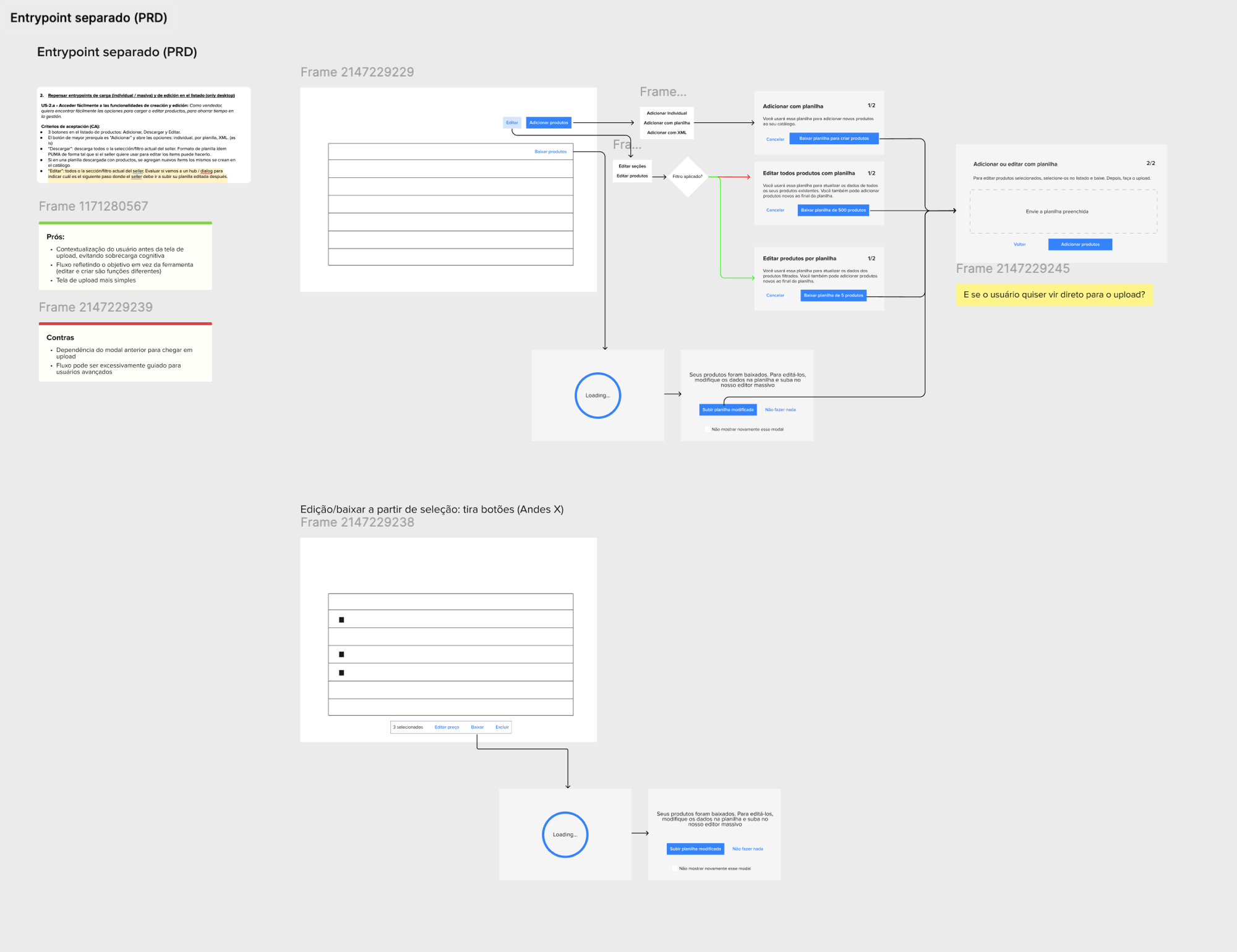
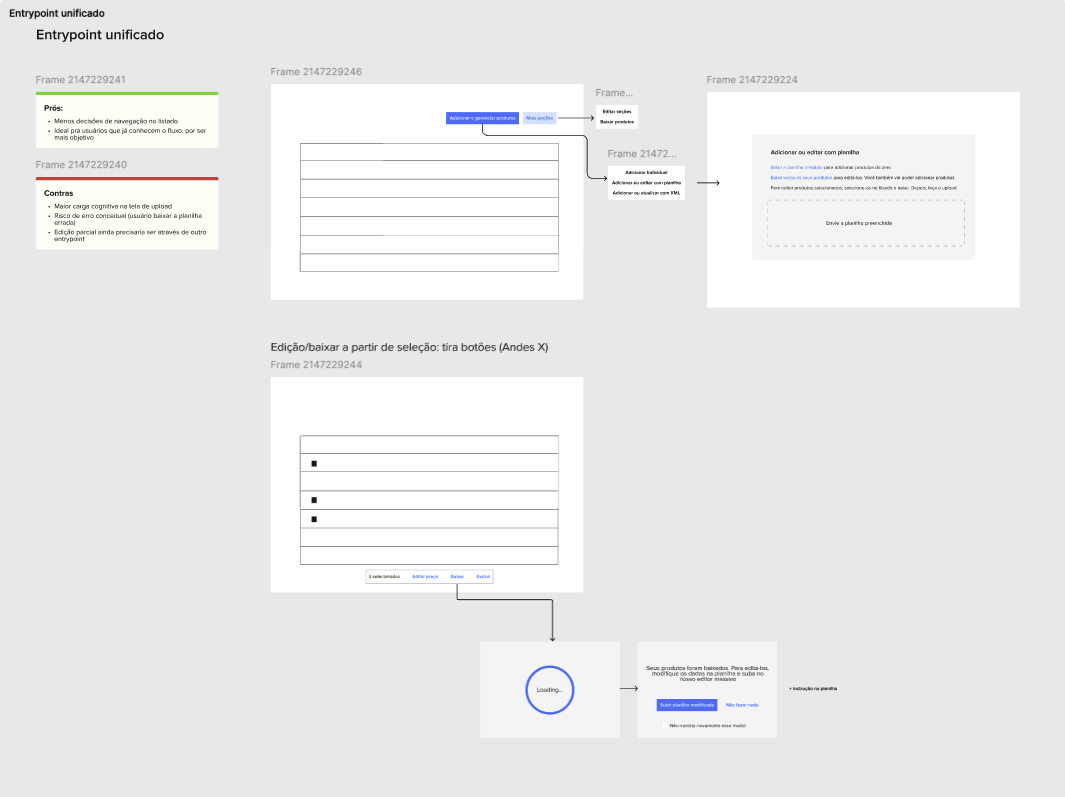
What the PRD asked for Separate entrypoint
Wireframes of the separate entrypoint as per PRD
My recommendation Unified entrypoint
Wireframes of the unified entrypoint — UX proposal

After the conceptual tests and alignment with product, the decision was to adopt the unified entrypoint. The solution was to rename the entry point from Add product to Add and manage products, making it clear that the same flow serves both bulk creation and editing — without needing separate buttons. With this decision made, the process moved on to exploring the remaining necessary changes: the new download entrypoints, the reorganization of the upload flow, and the new unified spreadsheet model.

From opportunity to solution

The three main changes in the bulk product management flow
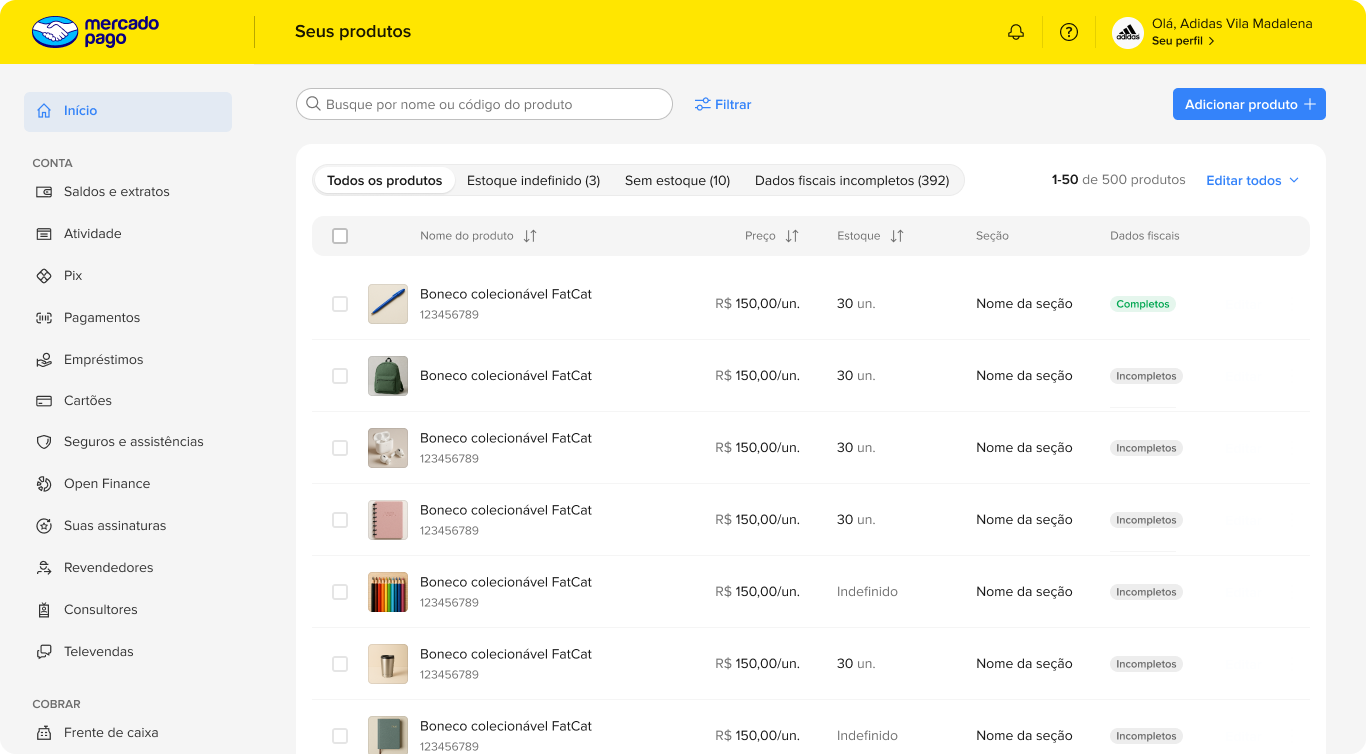
Before
Listing before
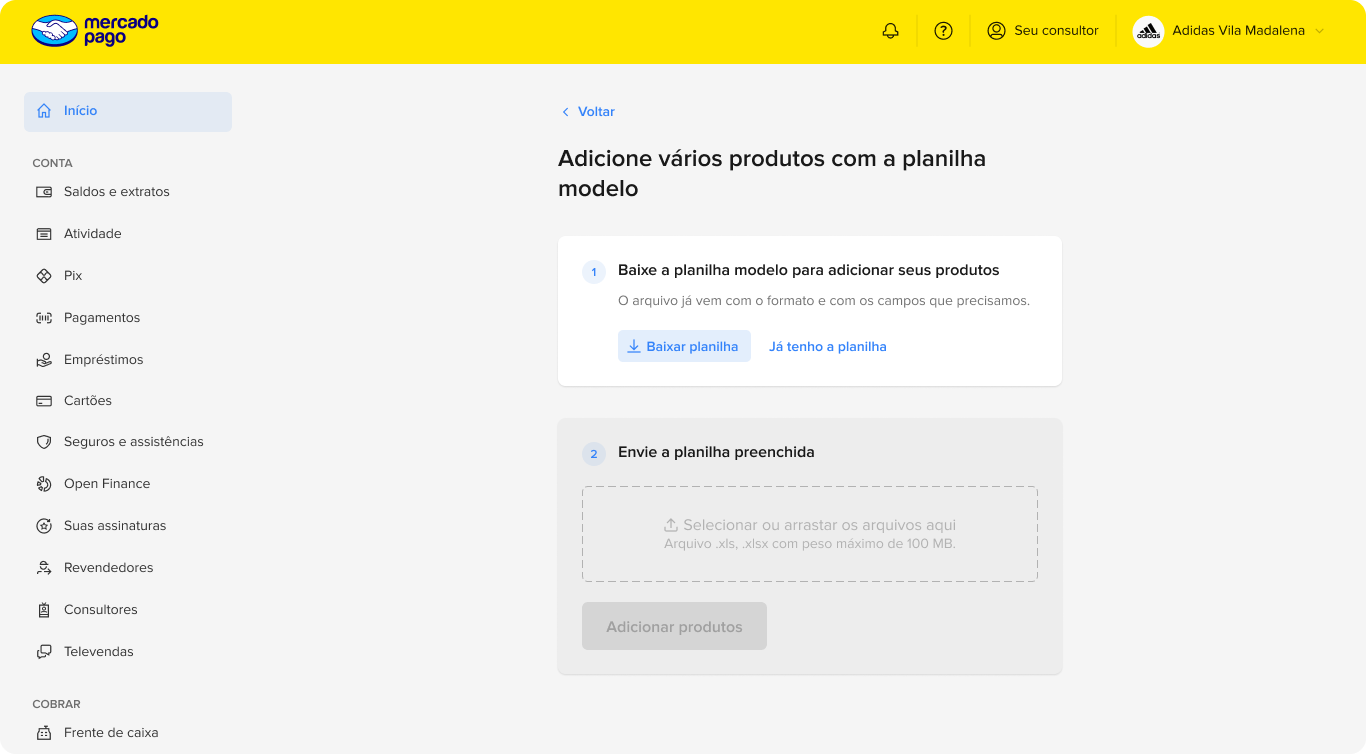
ProblemThe bulk creation button was separate from the tax editing access — to edit via spreadsheet, the entry was hidden under Edit all, further down the listing.

Product listing with creation and editing in separate flows
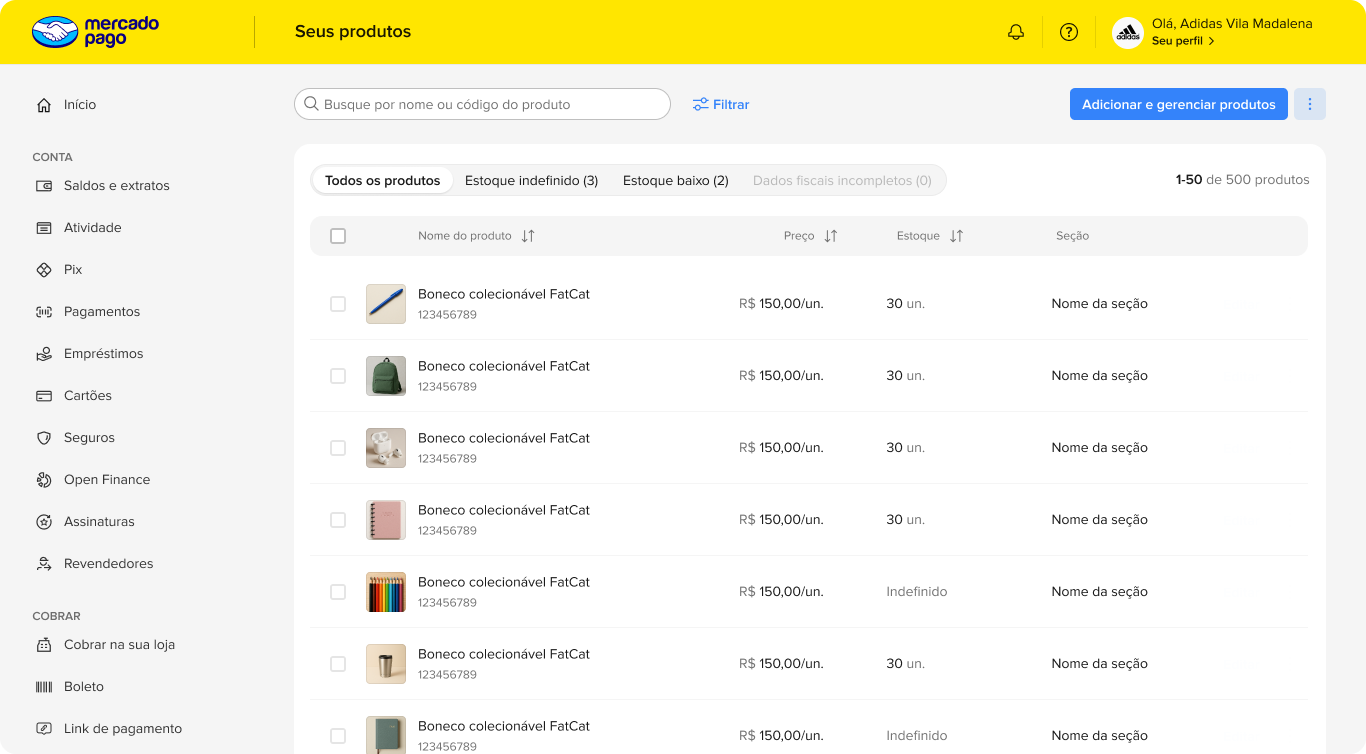
After
Listing after
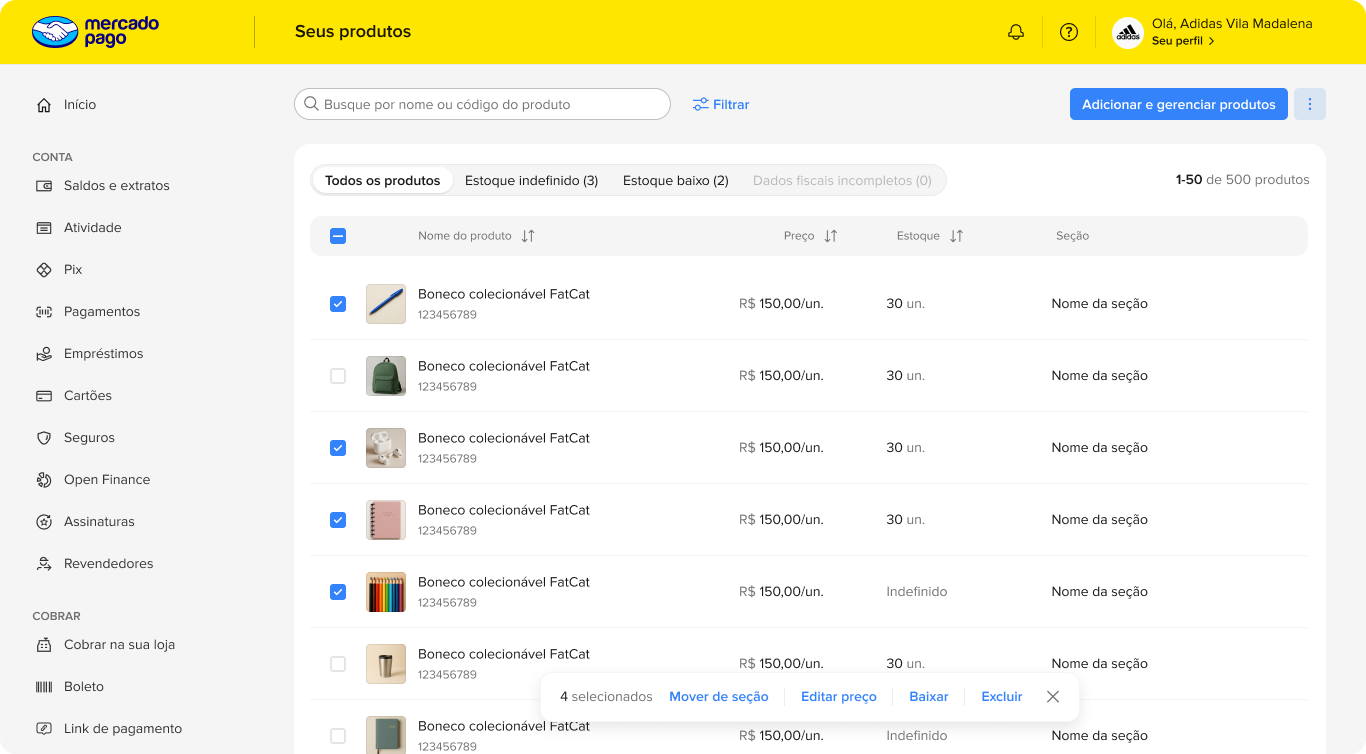
ImprovementWith bulk editing incorporated into the same creation flow, the entrypoint became unified. The button received a content update — from Add product to Add and manage products — to communicate its new dual function.

Product listing with unified actions

Before
Before — creation and editing
ProblemSubmission was gated behind download: there was no way to reach this screen with a file already prepared. In the new flow, the user can download the spreadsheet from the listing or from product selection — and arrive here directly to submit.
ProblemThe flow was creation-only, so the download only offered a blank spreadsheet. With bulk editing, a second download point became necessary — for users who want to download existing products and edit them.

Isolated creation flow, no integration with editing

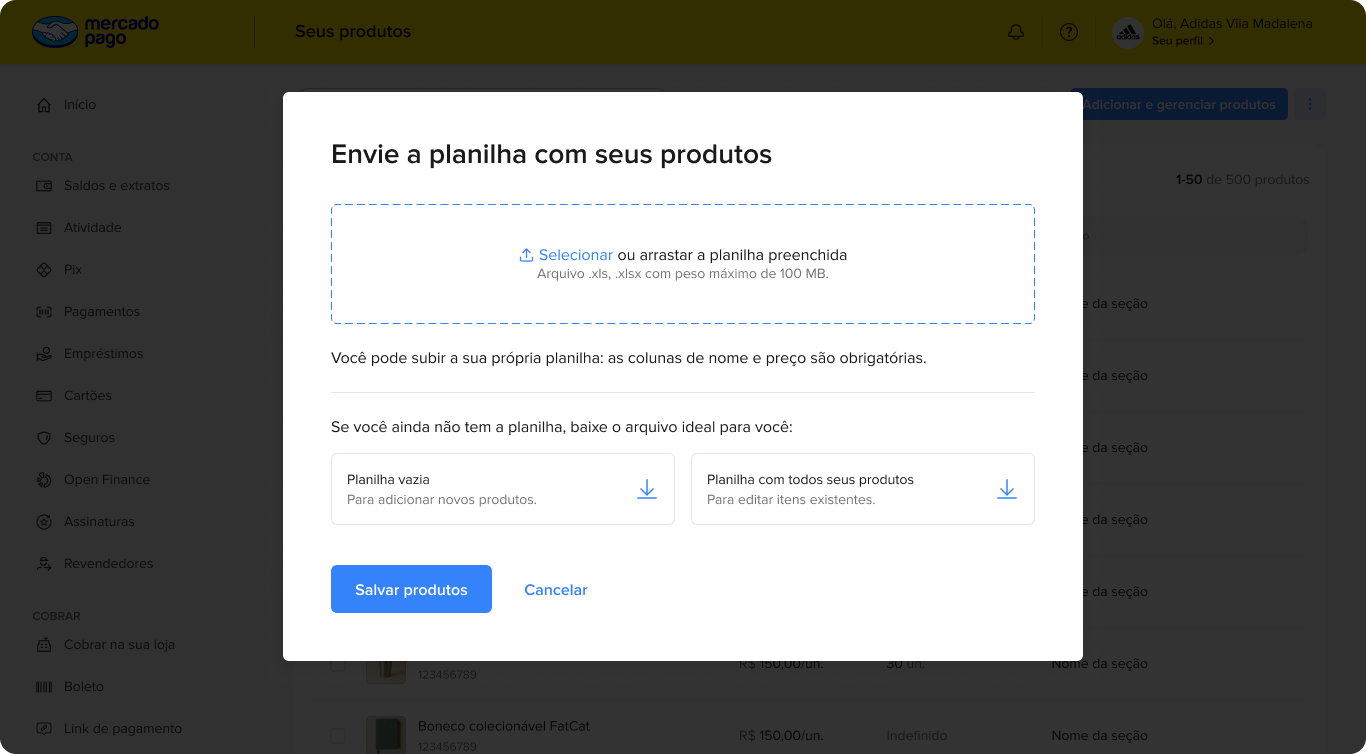
After
After — creation and editing
ImprovementDownload became a complement — a shortcut for users who don't yet have the file — and was moved lower on the screen, leaving submission as the primary action.
ImprovementSince the user has three paths to download the spreadsheet — in this modal, via product selection on the listing, and via the kebab menu — the file uploader was elevated to the top as the central task of the screen.

Creation and editing unified in a modal — a single spreadsheet, clear task context
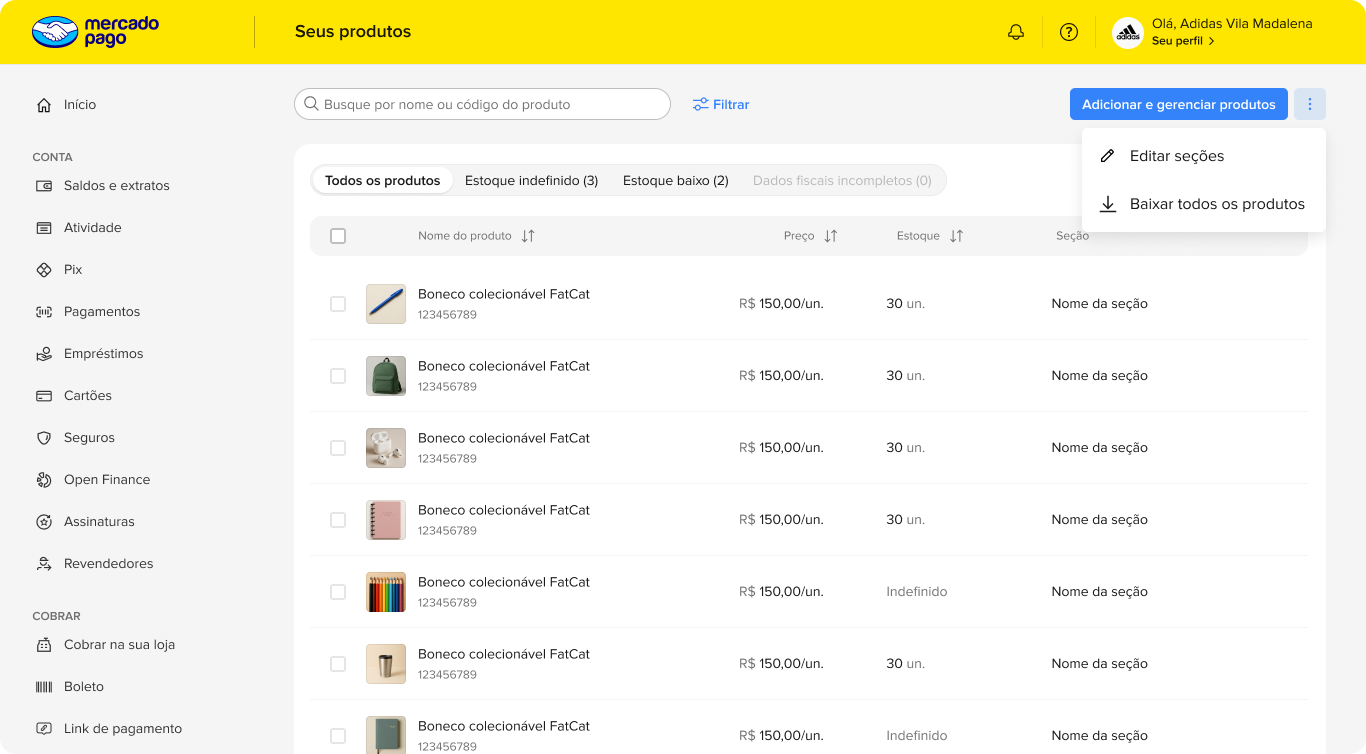
New · Via menu
Download via menu
ImprovementOne of the ways to download all catalog products as a spreadsheet. The other is from the bulk creation and editing modal itself.

New flow: full product download

New · Via selection
Download via product selection
ImprovementFrom the product selection on the listing, the seller can choose which items to edit and download them directly as a spreadsheet — without needing to export the entire catalog.

New flow: partial product download

What were the real impacts?

Launched in April.
Consistent week-over-week growth.

The product went live in April 2026. Funnel data shows growing adoption in MLM and MLB — from 74 combined downloads in launch week to over 300/week at peak, with sellers editing ever-larger volumes of items (MLM + MLB combined).

MLM and MLB · Apr–Jul 2026 · directional data · BigQuery 13/07/2026

Downloads/week +461%

From 41 to 230 weekly downloads in MLM — part of the combined growth from 74 to 300+ between MLM and MLB

MLM
Sellers in the new flow 2k+

1,354 in MLM and 733 in MLB · 25% download → edit conversion in MLM

MLMMLB
Items edited 57k+

In ~3 months · peak of 12,196 items in a single week

MLMMLB
What I took away from this delivery

Post-launch learnings

Defending your point of view

The pivot was the richest moment of the process. Building conceptual tests to support a proposal different from the PRD showed that arguing with data is as much a part of design as execution itself.

Post-launch data as input

The 25% download-to-edit conversion in MLM indicates the post-upload flow still has friction. The next iteration should focus on what happens after the spreadsheet is submitted.

Unification creates new complexity

Consolidating three tools into one spreadsheet solved the fragmentation — but created new challenges around error communication and in-file guidance. Something to prioritize in future versions.